The unique blog 6972
If your roof starts to drip in a storm or shingles lift in a strong wind, the first instinct is to search for a roof repairman near me and hope they can come fast. Speed matters, but so does knowing what a professional service call actually looks like. The best experiences share a common pattern: clear communication, methodical diagnostics, transparent pricing, and workmanship you can stand behind. The worst ones feel rushed, murky on scope, and leave you guessing what really got fixed.
I have spent years on roofs from Cape May to Morristown, and plenty of days crawling through attics in older colonials where every joist tells a story. Whether you work with a small crew or one of the larger roofing companies in New Jersey, a solid service call follows a practical rhythm. Here is how that unfolds, what decisions to expect along the way, and how to evaluate the trade-offs between short-term roof repair and longer-term roof replacement.
The first contact: intake that sets the tone
The process begins before a ladder ever goes up. When you reach a roofing contractor near me, a good office coordinator or owner will ask focused questions, not just your address. Expect to describe the age of your roof, the roofing material, where you noticed the issue, and whether the problem only appears in heavy rain or wind-driven storms. Share photos if you have them, especially close-ups of the damage and a wider shot that shows the roof pitch and surrounding features like chimneys or skylights.
Scheduling depends on weather, daylight, and urgency. Active leaks usually earn same-day or next-day attention, often as a temporary “stop the bleeding” visit if rain is imminent. For non-urgent concerns like a few missing shingles, you may be booked within a few days. If a company can’t give you a reasonable window or refuses to discuss process and pricing ranges, that is a red flag.
Many reputable firms outline their fee structure upfront. Some charge a flat diagnostic fee that is waived if you proceed with repairs. Others provide free inspections but build site time into their pricing. Neither approach is inherently better, but clarity is essential.
Arrival and safety: ladders, boots, and respect for your property
When the roofer arrives, timing and presentation count. The truck should be reasonably organized. Technicians should have safety gear, including a harness for steeper pitches. Shoes matter too. On asphalt shingle roofs, soft-soled boots help prevent scuffing granules on a hot day.
Before they step onto the roof, a seasoned repairman walks the property. They look for easy tells: clogged gutters spilling over, downspouts that dump right at the foundation, loose siding near a second-story eave that might be mistaken for roof trouble. They also note landscaping and fragile areas to avoid. I have seen more than one new tech place a ladder foot on a garden border stone, only to discover how well stone slides on wet mulch.
A quick word on insurance: any roofing contractor near me worth hiring carries liability and workers’ comp. You should not feel shy about asking for proof. Storm-chasing outfits sometimes skip coverage and hire day labor. Your risk is higher than the discount is worth.
The inspection: start where water starts
Most homeowners point to the ceiling stain and assume the leak is directly above it. Water has other ideas. It can travel along rafters and underlayment for several feet before finding a weak spot to drip. A competent inspection works from outside in, then inside out.
On the roof, the repairman checks the usual suspects. Shingles first: curled tabs, cracked sealant strips, or loss of granules that expose the mat. Next, flashings around penetrations such as plumbing stacks, chimneys, skylights, and satellite mounts. These areas account for a large share of leaks, usually because the original flashing was undersized or improperly layered. In New Jersey’s freeze-thaw cycle, caulked seams fail much faster than properly stepped and counter-flashed joints.
Valleys deserve special attention. Water volume concentrates there. If a previous repair used roofing cement as a cure-all, you may see a thick tar bead that hides a poorly woven valley. Sealant is a tool, not a structural fix. Good crews use it sparingly and wedge it under the shingle edge where UV won’t degrade it as quickly.
Gutters and ice dam evidence are next. On homes north of I-195, I often spot ridges of old ice melt or fascia staining. Those are signs the eaves may be short on ice and water shield or the attic ventilation is poor, both of which lead to winter leaks that vanish come spring.
Inside, the attic tells the truth. A flashlight on the underside of the sheathing reveals old leak paths as dark trails or white fungal blooms. If the roof has OSB sheathing, swollen edges around nail lines show prior wetting. The smell is a clue too. Damp insulation has a sweet, musty odor distinct from old wood. If the roofer insists on skipping the attic, you are losing half the diagnostic picture.
Documenting the problem: photos, not just promises
Expect photos, ideally with marked annotations. Angled shots of a shingle blow-off do not help much if you cannot identify the slope or the distance from a fixed reference point like a vent. Good documentation shows location, cause, and recommended remedy in plain words. This is not about fancy reports. It is about creating a record that you and the contractor can both reference if questions arise later.
On insurance claims, documentation becomes essential. Carriers often ask for “cause of loss,” which must be stated clearly: wind-driven shingle loss on the north slope, hail impact visible as granule loss with substrate bruising, or age-related thermal cracking. If your repairman shrugs and says “just wear and tear,” it can torpedo a valid claim.
The repair plan: scope, materials, and timelines
Here is where clear language matters. A good repair plan defines the exact location and the layers affected. That might be a shingle patch with new flashing boots at two plumbing stacks. Or a partial re-flash of a chimney with counter flashing let into mortar joints, not just surface glued. Or a valley rebuild over 6 to 10 linear feet with woven shingles and ice and water membrane underneath.
Material selection turns on what is already on the roof. If your shingles are architectural, a matching profile prevents a patchwork look. Manufacturers change colors over time, so “Weathered Wood” from one line may not match another. Good contractors carry a modest stock of common colors but will warn you if a patch will stand out. On slate or cedar, repair skill and sourcing matter more than color. Not every crew can properly repair these materials, and you should not be a training ground.
On metal flashing, thickness and metal type count. Aluminum is common, but on coastal homes or those with brick chimneys, I prefer heavier-gauge aluminum or even copper for longevity. It costs more upfront, but you are buying time, especially where mortar and flashing meet.
Timelines vary. A simple shingle patch with a boot replacement might take 60 to 90 minutes. A chimney re-flash can take half a day to a full day depending on access, mortar condition, and roof pitch. Valley rebuilds often land in the three to six hour window. Weather interrupts everything. No professional will tear open a valley with thunderheads on the horizon unless they can dry-in the area before leaving.
Pricing and what drives it
You will see a range of pricing methods. Some repairs are priced per fixture or per linear foot. Others are quoted as a lump sum based on anticipated hours and materials. The number itself depends on pitch, height, complexity, material, and access.
As rough guideposts in our region:
- Minor asphalt shingle repairs, including a few tab replacements and a pipe boot, often run in the low hundreds to around a thousand dollars depending on access and pitch. Chimney re-flashing in aluminum with step and counter flashing commonly lands between 1,200 and 2,500 dollars for a standard-sized chimney, more if masonry work is required. Valley rebuilds typically range from 800 to 2,000 dollars for a moderate span, driven by slope and underlayment needs.
These are not menu prices. They are working ranges that reflect typical labor and material costs for roofing companies in New Jersey. If a quote is far below the low end, something is missing, whether proper flashing, warranty support, or safety protocol.
When a repair is not enough: the pivot to replacement
Repairs are appropriate when the roof still has meaningful service life. If your shingles are under 12 to 15 years old, isolated damage from wind or a failed boot is a classic candidate for repair. If the roof is 20 to 25 years old with widespread granule loss and brittle tabs, repeated repairs become band-aids on tired material.
The pivot conversation usually starts in the attic. If you see widespread sheathing delamination, nail pops across multiple rafter bays, and daylight at flashing lines, your dollars stretch further with a new system rather than piecemeal work. You also need to weigh ancillary components. Ventilation upgrades, ice barrier installation, and drip edge corrections all add durability but are hard to bolt on to a failing field of shingles.
Homeowners inevitably ask about new roof cost. For a typical New Jersey single-family home with an asphalt architectural shingle system, the price of new roof installations often falls in the 8,000 to 18,000 dollar range in 2026 dollars for straightforward projects, with complex roofs, multiple stories, or premium shingles pushing 20,000 to 35,000 dollars or more. Tile, slate, or standing seam metal sit in even higher brackets. These ranges depend on roof size in squares, tear-off requirements, dump fees, underlayment type, flashing complexity, and ventilation upgrades.
If you are comparing a 3,000 dollar sequence of patch jobs over three years to a 14,000 dollar roof replacement that resets the clock, remember to add risk and hassle to your math. Water always finds openings at the worst time. A full system installs factory-matched components, restores warranties, and can lower insurance headaches.
Permits, codes, and regional realities
New Jersey municipalities vary in how they handle roofing. Many allow roof repair without a permit if the structural deck is untouched. Full roof replacement usually requires a permit and compliance with local energy and ventilation codes. Town inspectors often verify that ice and water shield covers the eaves to the proper distance inside exterior walls and that drip edges are correctly installed. A reputable contractor handles this paperwork and includes permit fees in the estimate.
Snow loads and nor’easter winds shape best practices too. I favor a wider ice and water membrane coverage in valleys and along eaves on homes along the Hudson and in higher elevations of Morris and Sussex counties. Ocean-adjacent homes in Monmouth or Ocean counties benefit from corrosion-resistant fasteners and more frequent fastener spacing along ridge lines.
What day-of repair work looks like
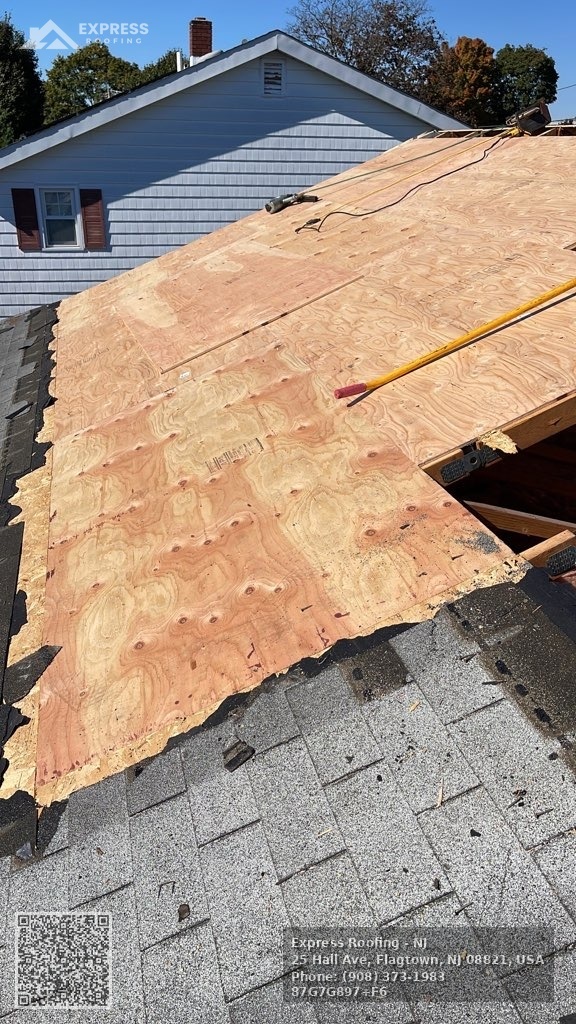
A tidy crew sets ground protection if necessary, such as tarps to catch debris near entry paths and plantings. Ladders are tied off where feasible. The foreman will confirm the plan with you in plain language. If something discovered on tear-off changes scope, you want to hear about it before they proceed. Finding rotted sheathing under a long-standing leak is common. Replacing a few sheets of plywood adds cost and time, but leaving soft decking in place makes the new work unreliable.
For shingle repairs, the crew lifts the course above, removes nails carefully to avoid breaking adjacent tabs, and slides a new shingle into Roof repair Express Roofing - NJ position, aligning the exposure with the surrounding field. Sealant is used minimally under the leading edge if the sun is weak and adhesion needs a boost. For plumbing vents, the old boot is cut free, shingles are loosened above, and a new boot gets tucked correctly under the upslope shingles and over the downslope ones. If your last repair sat the boot on top of surrounding shingles and caulked the edges, that was cosmetic, not proper layering.
On chimneys, step flashing pieces are woven up the side, each overlapped by the next shingle course, with counter flashing regletted into the mortar joint and sealed. Surface-mount counter flashings that rely entirely on adhesive and screws through the brick face age poorly. Properly inserted counter flashing outlives a shingle cycle.
Valleys come in three common styles: open metal, closed-cut, and woven. In our climate, I often prefer closed-cut for architectural shingles because it balances water guidance and aesthetics. Open metal valleys can be excellent when high-volume water or tree debris is a factor, but only if the metal gauge is sufficient and the underlayment beneath includes ice and water.
Communication during and after the repair
Expect mid-course updates if the crew finds surprises. Smart homeowners ask for a quick roof-side review before the team comes down. Five minutes at the top of a ladder with a foreman can save confusion later. If you are not comfortable climbing, ask for additional photos that show the repair before and after, wide and tight.
When the crew finishes, they should run a magnet around the work zone to collect nails and fasteners. Many contractors do a decent job of this near the driveway and front walk but skip side yards or behind shrubs. I carry an extra long-handled magnet for precisely that reason. One missed nail in a tire cancels any savings you thought you gained by choosing the cheaper bid.
Paperwork matters at the end too. You should receive an invoice that lists the materials used, the specific location of the repair, and any limitations of the warranty. Repair warranties are often shorter than full-roof warranties because the tech is integrating new material into older assemblies. A 1 to 3 year workmanship warranty is common on targeted roof repair in our market. If you are quoted a lifetime warranty for a spot repair, read the fine print. It usually contains carve-outs that make it less generous than it seems.
How to prepare your home for a service call
Two small preparations make a big difference. First, clear driveway access so the crew can position ladders safely and keep tools close. Second, protect the area beneath the leak if you have an active drip. Move furniture, roll back rugs, and set a bucket. If ceiling drywall is waterlogged and bowed, mention it when you book. The roofer may recommend a controlled release with a small puncture to prevent a sudden collapse. That interior work is often outside a roofer’s scope, but a little guidance goes a long way.
Pets and alarms are worth a mention. Dogs get agitated with strangers overhead. If you can, crate them in a room without ceiling damage. As for security systems, some units trigger on roof vibration. Let your monitoring service know you have contractors on site.
The difference between a cheap patch and a lasting repair
I see three shortcuts again and again. First, relying on roofing cement as the primary fix. It has a place as a secondary seal, but it cracks and shrinks under UV. Second, skipping underlayment upgrades when opening a valley or eave area. Ice and water shield is inexpensive insurance, and its absence in a cold climate is a false economy. Third, mismatching nails and exposure lines. If nails sit too high on the shingle, wind can get under the tab and lift it. Overdriven nails that cut the shingle mat are just as bad.
A lasting repair respects layers: deck, underlayment, starter courses, field shingles, and flashings, each shingled in the right direction. It looks simple once done. The craft lives in the sequencing.
How to evaluate your contractor beyond the website
Online reviews tell part of the story, mostly at the extremes. What you want is recent, specific feedback about repairs similar to yours. Ask for local references from the past six months. Good contractors do not hesitate. You can also learn a lot from how they talk about options. If the first and only suggestion is a full roof replacement before they inspect, be cautious. A seasoned roofer can explain the path from small repair to larger work without pushing you there prematurely.
For homeowners who searched roof repairman near me because water is falling in a pan right now, speed is essential, but you still control the process. Ask about materials, scope, and warranty in plain language. If the crew speaks to you like a partner, not a bystander, chances are good you will get an outcome you trust.
Insurance, storms, and the fine print
After big wind events, the market changes overnight. Phone lines jam, prices creep up, and unfamiliar trucks appear with out-of-state plates. Insurance can help, but the process demands clear cause documentation and patience. Do not sign an assignment of benefits without understanding it. In many cases, you only need a simple contingency agreement that allows the contractor to work with your adjuster while you retain payment control.
Adjusters look for patterns that indicate storm damage versus age. On asphalt shingles, hail leaves bruised spots where granules are crushed and the substrate softens. Wind creases the shingle along a line where it flipped and bent. A roof with general granule wear and brittle tabs likely points to age, which is often excluded from coverage. Good roofing companies in New Jersey know how to present factual evidence, not wishful thinking. That helps your claim if it is valid, and it prevents energy wasted on claims that will not go through.
Maintenance that reduces emergencies
A small set of habits preserves roofs and limits surprise service calls. Keep gutters clear each fall and spring. If trees overhang, make it quarterly. Trim branches that scrape the roof or drop heavy seed pods. From the ground, scan after major storms. If you have binoculars, look at the bottom edges of shingles for gaps or lifted corners. Inside, peek at the attic after driving rain or rapid thaws. Early signs include pinhole light near penetrations or a faint line along a rafter.
Ventilation is the quiet backbone of roof longevity. Poor airflow bakes shingles from below in summer and fosters ice dams in winter. If a roofer mentions adding intake at the soffits or balancing ridge vent with proper intake, that is not upsell fluff. It is system thinking. You can invest 10 percent of a roof replacement budget in ventilation and gain several extra years of service life.
Deciding between repair and replacement when selling or staying
If you plan to stay five to ten years, a repair that extends service life and prevents interior damage is often the rational move, even if the roof shows age. If you are selling within twelve months, the calculus shifts. Buyers and inspectors flag roofs that look worn, and lenders may require a roof certification or additional escrow. Sometimes a modest repair paired with a transferable warranty satisfies concerns. Other times, a full replacement increases buyer confidence and speeds the sale. Agents in our market often report a two to three times return on essential exterior upgrades in reduced days on market and fewer repair negotiations, provided the work is done by a recognized contractor and documented.
A simple homeowner checklist for a smooth service call
- Share clear photos and a brief history of the leak when you book, including when it appears and any prior fixes. Confirm whether there is a diagnostic fee, warranty terms for repairs, and what counts as a change order. Ask if attic access is needed and make it available. Move vehicles for ladder placement and lay towels where leaks drip. Request photo documentation before and after. If matching shingle color matters to you, say so upfront. Walk the property with the foreman after completion, confirm magnet sweep, and get the invoice detailing scope and materials.
Final thoughts from the roofline
When you invite a roof repair professional onto your property, you are asking someone to manage one of the most unforgiving building systems in your home. Water is patient and relentless. The best roofers meet that challenge with method, not magic. They trace water paths, rebuild layers in the right order, and tell you when your money is better spent on a system-level solution.
If your search began with roof repairman near me because a storm just tested your shingles, take a breath and remember what a good service call includes: questions that reveal the root cause, documentation you can keep, transparent pricing, and a repair that respects how roofs actually shed water. And if the inspection shows that roof repair is throwing good money after bad, ask for a straight conversation about roof replacement, including the new roof cost range for your home, what components are included, and whether the price of new roof work comes with the ventilation and flashing details that prevent you from having this same conversation a few winters from now.
A reliable roofing contractor near me will meet you there, on that line between urgent need and long-term value, and help you choose wisely for the home you live under every day.
Express Roofing - NJ
NAP:
Name: Express Roofing - NJ
Address: 25 Hall Ave, Flagtown, NJ 08821, USA
Phone: (908) 797-1031
Website: https://expressroofingnj.com/
Email: info@expressroofingnj.com
Hours: Mon–Sun 7:00 AM – 7:00 PM (holiday hours may vary)
Plus Code: G897+F6 Flagtown, Hillsborough Township, NJ
Google Maps URL: https://www.google.com/maps/place/Express+Roofing+-+NJ/@40.5186766,-74.6895065,17z/data=!3m1!4b1!4m6!3m5!1s0x2434fb13b55bc4e7:0xcfbe51be849259ae!8m2!3d40.5186766!4d-74.6869316!16s%2Fg%2F11whw2jkdh?entry=tts
Coordinates: 40.5186766, -74.6869316
Google Map Embed
Social Profiles
Facebook: https://www.facebook.com/expressroofingnj
YouTube: https://www.youtube.com/@ExpressRoofing_NJ
X (Twitter): https://x.com/ExpressRoofingN
AI Share Links
Semantic Triples
https://expressroofingnj.com/
Express Roofing NJ is a community-oriented roofing contractor serving Somerset County, NJ.
Express Roofing - NJ provides roof replacement for homes across Somerset County.
For roofing help, call (908) 797-1031 or email info@expressroofingnj.com to reach Express Roofing - NJ.
Connect on Facebook: https://www.facebook.com/expressroofingnj and watch project videos on YouTube: https://www.youtube.com/@ExpressRoofing_NJ.
Follow updates on X: https://x.com/ExpressRoofingN.
Find the business on Google Maps: View on Google Maps.
People Also Ask
What roofing services does Express Roofing - NJ offer?
Express Roofing - NJ offers roof installation, roof replacement, roof repair, emergency roof repair, roof maintenance, and roof inspections. Learn more: https://expressroofingnj.com/.
Do you provide emergency roof repair in Flagtown, NJ?
Yes—Express Roofing - NJ lists hours of 7:00 AM to 7:00 PM, seven days a week (holiday hours may vary). Call (908) 797-1031 to request help.
Where is Express Roofing - NJ located?
The address listed is 25 Hall Ave, Flagtown, NJ 08821, USA. Directions: View on Google Maps.
What are your business hours?
Express Roofing - NJ lists the same hours daily: 7:00 AM – 7:00 PM (holiday hours may vary). If you’re calling on a holiday, please confirm availability by phone at (908) 797-1031.
How do I contact Express Roofing - NJ for a quote?
Call/text (908) 797-1031, email info@expressroofingnj.com, message on Facebook
https://www.facebook.com/expressroofingnj,
follow on X https://x.com/ExpressRoofingN,
or check videos on YouTube https://www.youtube.com/@ExpressRoofing_NJ
Website: https://expressroofingnj.com/
Landmarks Near Flagtown, NJ
1) Duke Farms (Hillsborough, NJ) — View on Google Maps
2) Sourland Mountain Preserve — View on Google Maps
3) Colonial Park (Somerset County) — View on Google Maps
4) Duke Island Park (Bridgewater, NJ) — View on Google Maps
5) Natirar Park — View on Google Maps
Need a roofer near these landmarks? Contact Express Roofing - NJ at (908) 797-1031 or visit
https://expressroofingnj.com/.
